

Private equity explained
Learn how private equity shapes global business from the beginning
To be a private equity lawyer, you first need to understand the sector. Here is the world you are about to enter.
Private equity explained
To be a private equity lawyer, you first need to understand the sector. Here is the world you are about to enter.
Private equity moves money into businesses, assets and ideas – and in doing so, shapes industries, creates value and drives economic growth. The deals are large. The decisions are consequential. And the legal work that sits behind it is genuinely complex.
At its heart, the model is straightforward: sponsors raise money from investors, buy businesses and assets and work to generate returns over time. But the structures, strategies and legal challenges involved are anything but simple.
For more than 50 years, Simpson Thacher has been at the forefront of private equity, advising its pioneers. From day one, you will be immersed in this world.
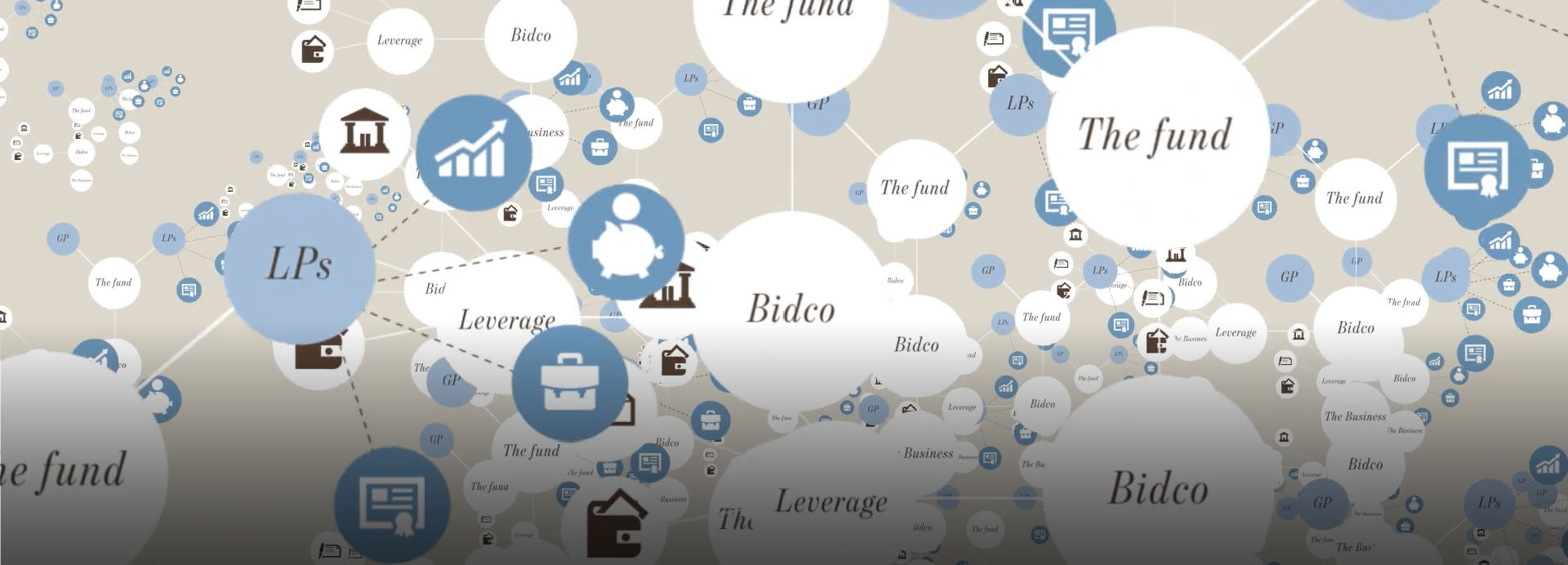
From raising a fund to closing a deal, managing a portfolio company and eventually exiting an investment – the private capital lifecycle is a long and interconnected process. See how the different stages fit together, and where the legal work sits within each of them.

Sponsors raise capital from investors known as limited partners, or LPs – typically pension funds, sovereign wealth funds, universities and large family offices. The LP commits to put money in; the GP decides how and when to invest it. Setting up the fund, agreeing its terms and defining what it can and cannot do is specialist legal work. It is one of the areas where Simpson Thacher has unmatched depth.

Most private equity acquisitions are funded by a mix of equity and debt – think of it like buying a house with a mortgage, but at a very different scale. Banks, bonds and private credit funds may all play a role. Getting the financing right is as important as the deal itself, and Simpson Thacher’s Finance and Capital Markets groups sit at the centre of this work.

At the centre of every private equity structure is the sponsor – also known as the general partner, or GP. Sponsors identify an investment strategy, raise a fund to pursue it and make the decisions about where money goes. They are the engine of the private capital ecosystem – and they are Simpson Thacher’s core clients.
Once a fund is in place, the sponsor identifies targets – a company, a property portfolio, an infrastructure asset. A dedicated vehicle is created to buy it.
Negotiating the purchase, managing the tax implications and advising on any competition issues are all covered by the work of our Mergers and Acquisitions, Infrastructure, Real Estate, Tax and Antitrust teams.
Transactions cross borders, involve competing bids and demand fast, precise thinking. The deals are large. The stakes are real.

Private equity does not end at closing. Once an asset is owned, clients need advice on refinancing, further investment, management equity, exits and – where necessary – restructuring. Tax, competition law and regulatory questions run through every stage. The private capital lifecycle is long and interconnected, and Simpson Thacher advises across all of it.
Private equity as we know it took shape in the latter half of the twentieth century, as institutional investors began putting capital into private markets in search of returns that public equities could not offer. Large leveraged buyouts in the 1980s established the template. The decades that followed brought greater sophistication: new fund structures, new strategies, new investor bases and new geographies.
Today, private equity is a multi-trillion-dollar global industry, present in every sector of the economy. It has also broadened considerably – encompassing real estate, private credit, energy and infrastructure and secondaries alongside traditional buyout strategies.
Simpson Thacher has been a part of that story from the beginning.